

A long, long time ago…
Before the cloud, before .NET, before some of our engineers could legally drive — there was SQLWindows. We've been modernizing business-critical software for a very long time, and we kept the receipts.
Magazine articles printed on actual paper, trade-press migration stories, and the original porting playbook. Dial-up not required.
CenturaPro Magazine
Before the web ate everything, we wrote for CenturaPro — "Hot Ideas for Centura Developers" — printed on actual paper. Yes, those bylines are our founders. No, the screenshots were not in color.
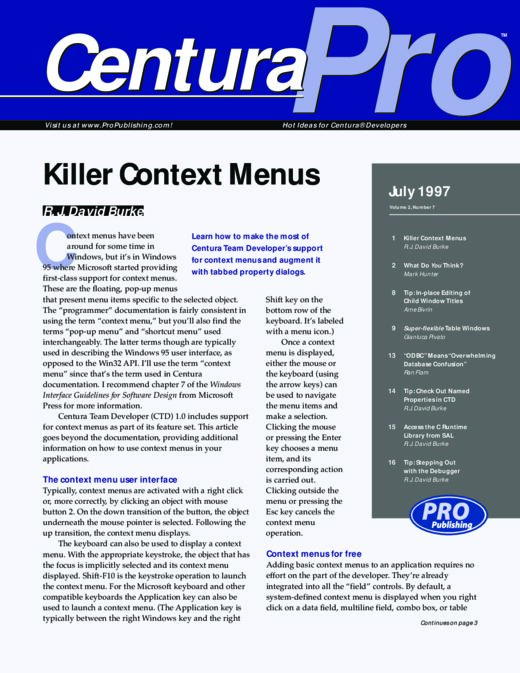
Killer Context Menus & Super-Flexible Table Windows
by incl. Gianluca Pivato
A full 16-page issue from back when a right-click menu was a genuine competitive feature. The cover story wrestles context menus into Windows 95; flip a few pages and a young Gianluca Pivato is explaining how to build super-flexible table windows. Shipping software was hard. The screenshots were grayscale.
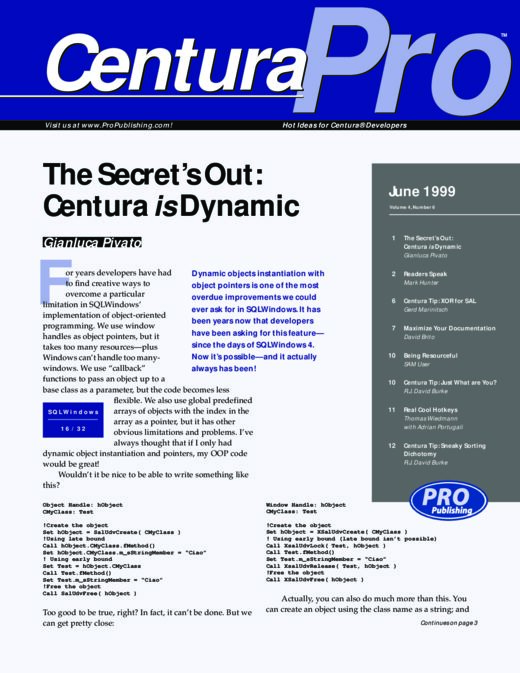
The Secret's Out: Centura is Dynamic
by Gianluca Pivato
Years before the runtime would admit it was possible, our co-founder worked out how to instantiate objects dynamically in SQLWindows — pointers, late binding and all. “It actually always has been [possible],” he wrote, with the quiet confidence of someone who had clearly spent a weekend proving it.
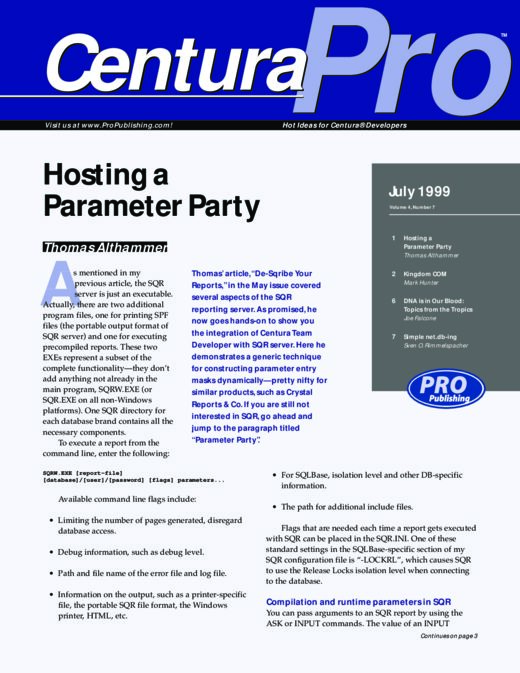
Hosting a Parameter Party
by Thomas Althammer
Thomas throws a “parameter party” — wiring Centura Team Developer up to the SQR reporting engine and building dynamic parameter-entry masks. The '90s: when integrating two products was a guest-list situation and your reporting server shipped as its own EXE.
Press & Migration Stories
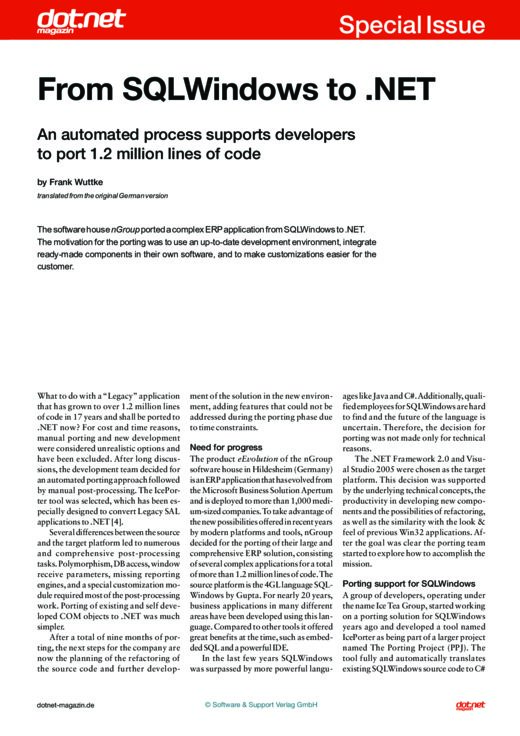
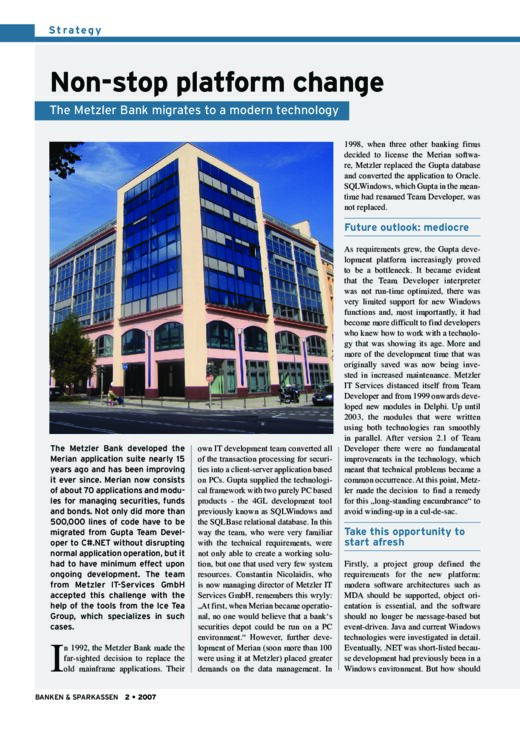
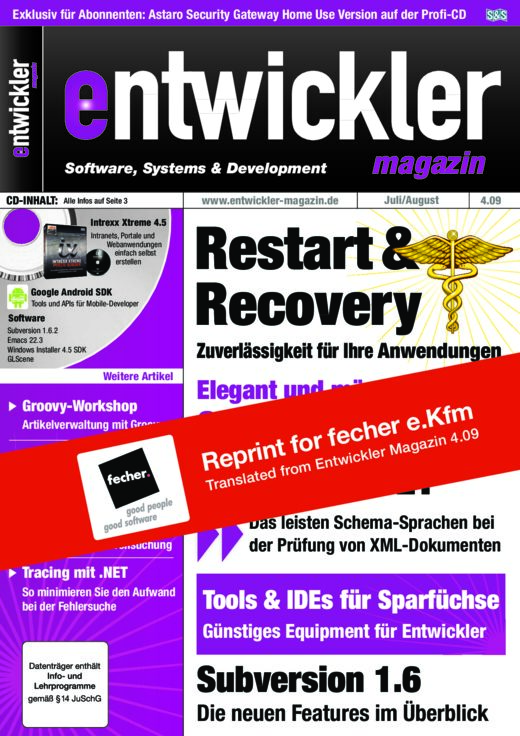
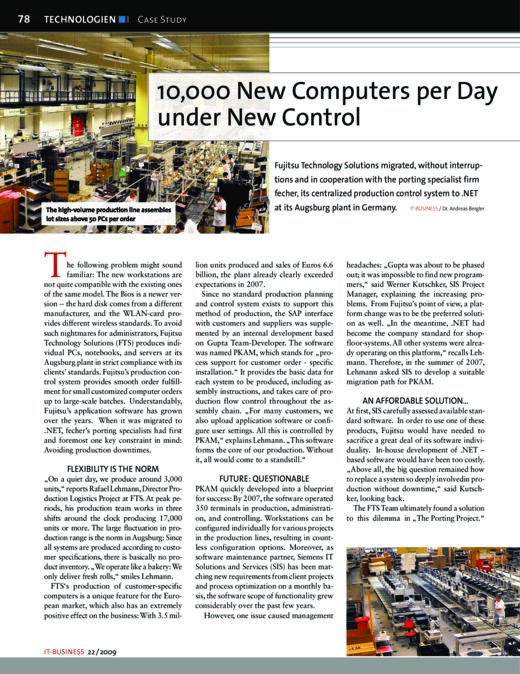
The 2000s: a golden age of trade magazines and very real, very large legacy systems quietly moving from Gupta/SQLWindows to .NET — usually without anyone noticing the engine had been swapped mid-flight.
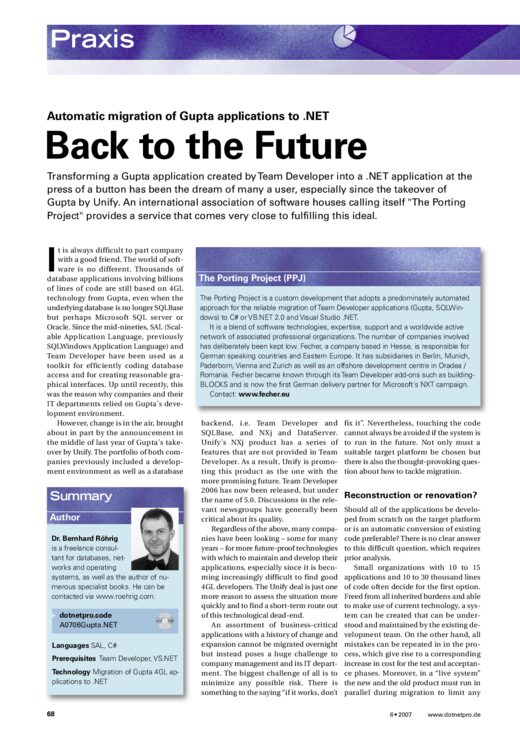
Back to the Future
Turning Gupta Team Developer apps into .NET applications through automated transformation. The title was a documentary, not a joke — though we did lean into the DeLorean energy.
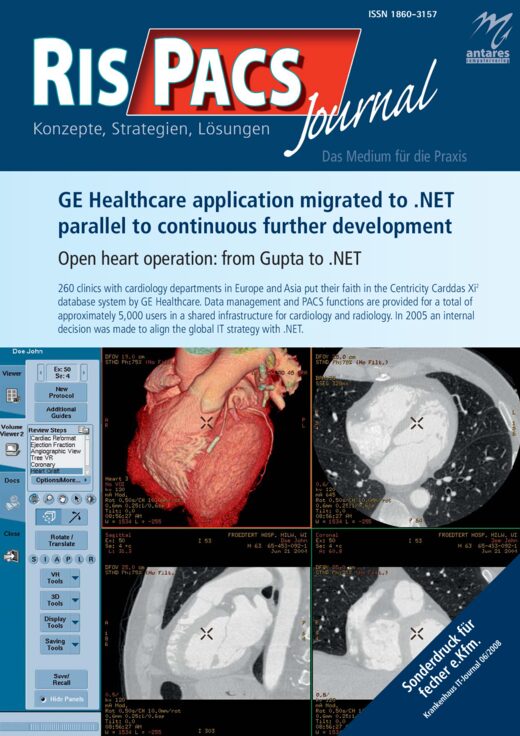
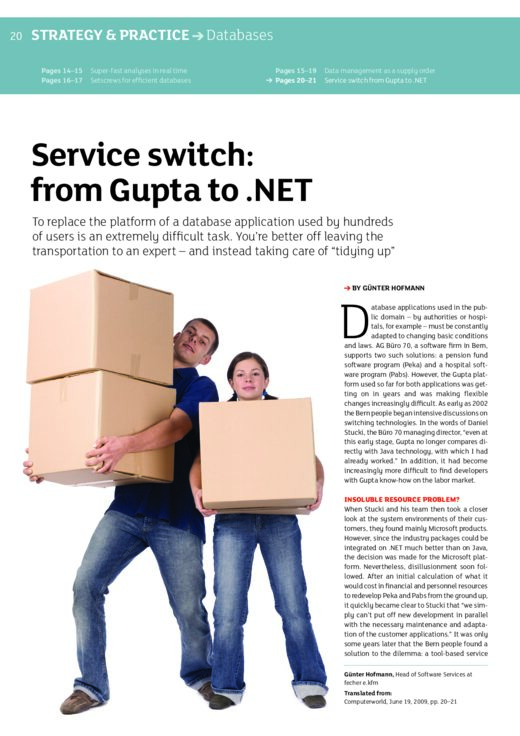
Open-Heart Operation: from Gupta to .NET
260 cardiology clinics across Europe and Asia run on the Centricity Cardas Xi² system, so “rewrite it and hope” was firmly off the menu. We performed the platform transplant from Gupta to .NET. The patient — an actual cardiology system — pulled through.
Modernizing the Front End with .NET
Telcos worldwide bill their customers with LHS's BSCS Customer Care & Billing software. We modernized the front end to .NET — because nothing says “mission critical” quite like the system that decides your phone bill.
White Papers
How we turn "we have a giant legacy app and we are mildly terrified" into a calm, well-defined process. The original PPJ porting playbook, preserved for posterity.
From Team Developer to Web
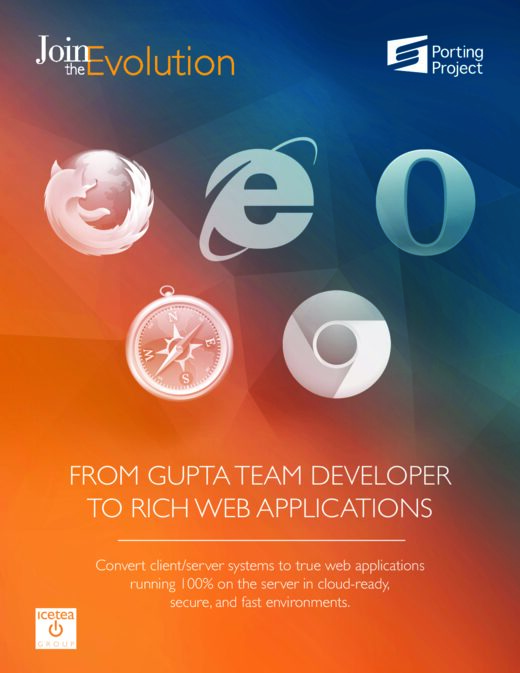
The pitch: take a Gupta Team Developer client/server app and run it 100% on the server as a real web application — cloud-ready, secure, fast. The PPJ origin story, in PDF form.
Microsoft .NET vs. Team Developer
A gloriously detailed, feature-by-feature comparison table. If you have ever wanted to win a platform argument with a spreadsheet, this is your document.
Join the Evolution
Speed, reliability, looks, productivity, real web apps — the one-pager that politely asked legacy Gupta developers to, well, join the evolution. (5 MB of evolution, to be precise.)
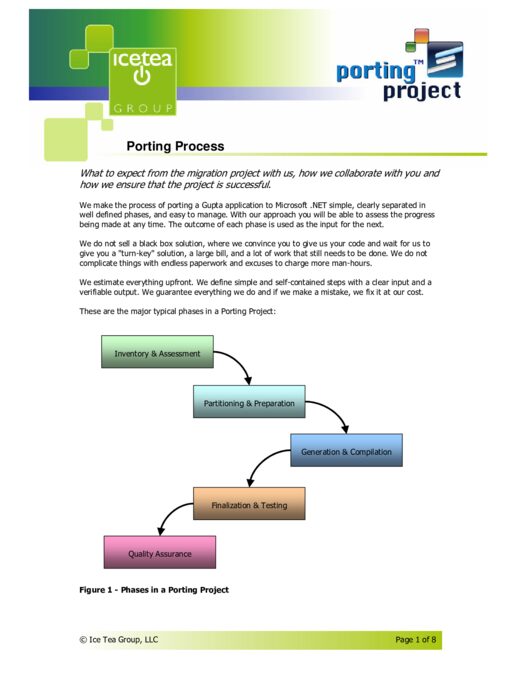
The Porting Process
How we turn "we have a huge legacy app and we are scared" into well-defined, manageable phases. The methodology behind the magic.
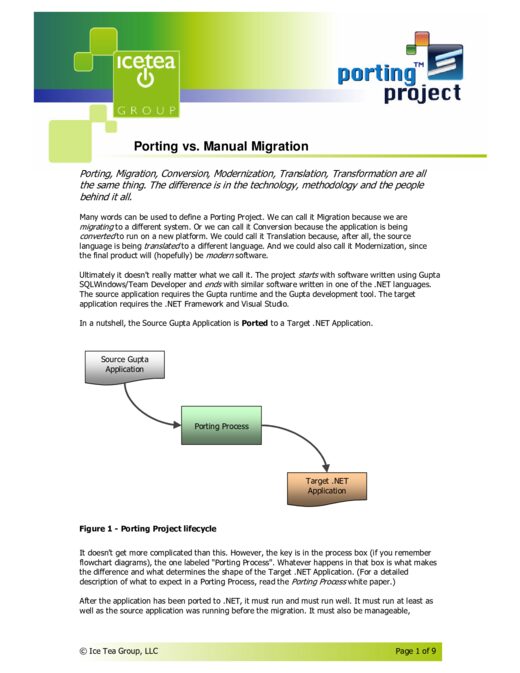
Porting vs. Manual Migration
Why feeding your codebase through an automated porting engine beats migrating it by hand — in technology, in methodology, and in the number of weekends your team gets to keep.
Still running something from this era?
If your business depends on software old enough to remember floppy disks, we've quite literally been doing this since then. Let's bring it to the web — no rewrite required.
Talk to us about modernizing it